


Djembe Woods - The Expert Guide by Djembe AWA
Why Wood Species Matter in a Djembe
The wood species used for the shell of a djembe is one of the most consequential factors in the instrument's final sound. Different African hardwoods vary enormously in density, porosity, internal structure, and resonant frequency and all of these factors shape the tonal character of the finished drum.
At Djembe AWA, Jeremy Tomasck selects each shell individually, assessing the grain, density, and resonance of the wood before assembly. Understanding the difference between species helps you make an informed choice for your playing style, budget, and context.

Lenke (Afzelia africana) -
The King of Djembe Woods
Lenke is widely considered the best wood for professional djembes. A dense and heavy African hardwood, Lenke produces a deep, warm, and extremely powerful bass, a precise and incisive slap, and a fully developed tonal range. Its high density gives the shell maximum acoustic projection—essential for stage performance and playing in large ensembles.
Lenke djembes are the instrument of choice for professional djembe players and discerning musicians. They are heavier than Melina djembes, but the superior acoustic quality is immediately noticeable to any experienced player.

Bala (Pterocarpus erinaceus) - aka Khare aka Gbeng - Rare Wood
Bala, also known as rosewood or Pterocarpus erinaceus is a rare and prized wood used for modern Guinean djembes. Its acoustic character is distinct from Lenke: brighter, more percussive, and with exceptional projection in the higher registers.
Bala djembes possess a characteristic brilliance and incisive quality that make them ideal for lead djembe roles in ensemble settings. The rarity of the wood makes Bala instruments true collector's items as well as exceptional playing instruments.
Kolo Kolo -
The Newcomer
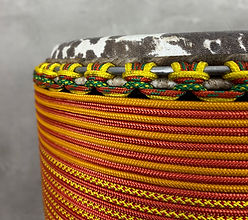
Kolo Kolo: also a very dense wood, recently used for djembe making, an ideal mix between lenke and bala.
Prized for its exceptional projection-to-weight ratio, it produces a clear, bright, and focused sound.
Kolo Kolo djembes are also popular for studio recording, where their clear projection and defined tonal character translate well to microphone capture

Melina (Gmelina arborea) - The Sustainable Choice
Melina is a plantation wood grown in Southeast Asia and West Africa, chosen for its durability and excellent acoustic properties. A djembe made of Melina produces a balanced, warm sound across all three registers—well-suited for learning, teaching, and regular practice.
With a lower density than other commonly used woods, Melina is a lightweight wood that retains good resonance and powerful projection when properly shaped. It is sustainably sourced.

Dugura / Djalla -
Rare Limited Editions
Occasionally, Djembe AWA works with other rare and exceptional West African woods, including Dugura and Djalla, each with its own unique acoustic signature and visual beauty.
These woods appear in our limited-edition pieces, available in very small quantities.

Which Wood Is Right for You?
-
Beginner/student: Melina, accessible, balanced, durable.
-
Intermediate player: Kolo Kolo, clear sound.
-
Advanced/stage performer: Lenke or Bala, maximum power and projection.
-
Collector/connoisseur: Bala or limited editions, rarity, history, and exceptional tone.
Djembe Wood Types - Belgium & Europe
We provide a professional complete guide to the woods used in AWA djembes: Lenke, Bala, Kolo Kolo, Melina, and Dugura. Sound characteristics, density, and origin. European shipping.

Contact/Repair
Have a question? Need a quote? Need to fix djembe/dunun/any drums...? Or do you simply want an upgrade?
Simply let us know and we will get back to you soon as we can.
jeremy.tomasck@hotmail.com / Brussels, Belgium